
Schramsberg Vineyards
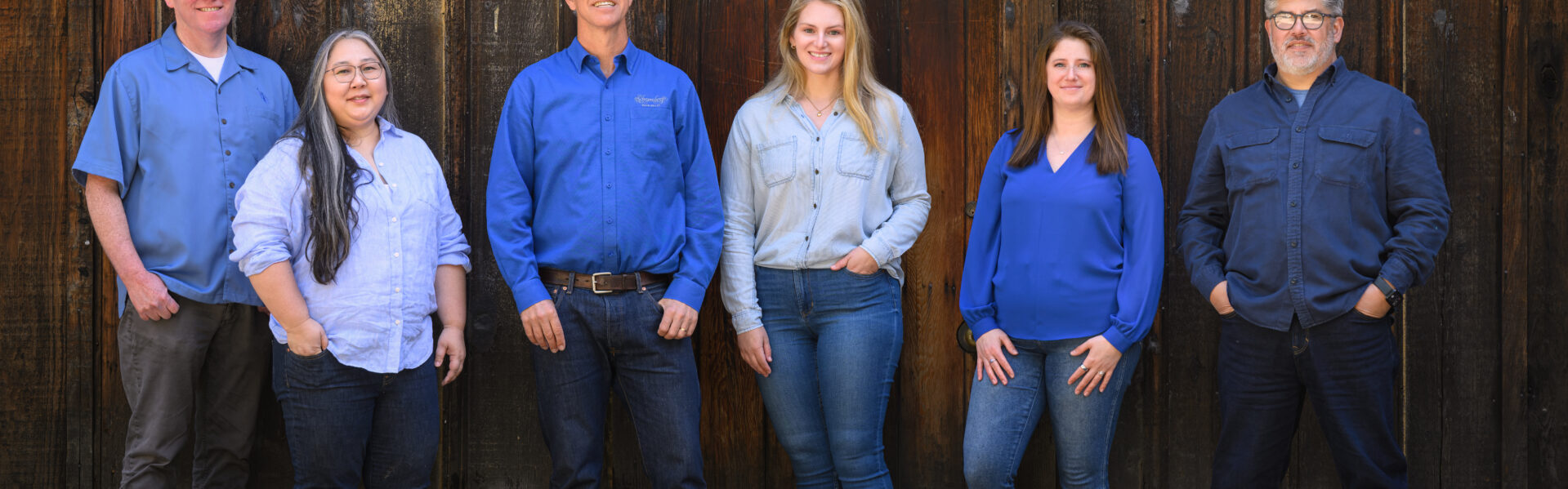
Greetings from Schramsberg! I hope that the first part of 2026 finds you all healthy and happy. As is always the case in February, we are busily working on putting blends together from the 2025 vintage. The base wines that we worked so hard to make last year are coming together nicely after a little bit of a rest. Between our post-fermentation tastings and our end-of-year evaluations, each of the lots we produce gets tasted multiple times before we finalize which one of our blends they’ll be contributing to. One of the reasons we taste these base wines multiple times is that they do change from month to month and over the course of our time with them, the lots we thought would be our favorites are occasionally surpassed by lots we weren’t as in love with previously.
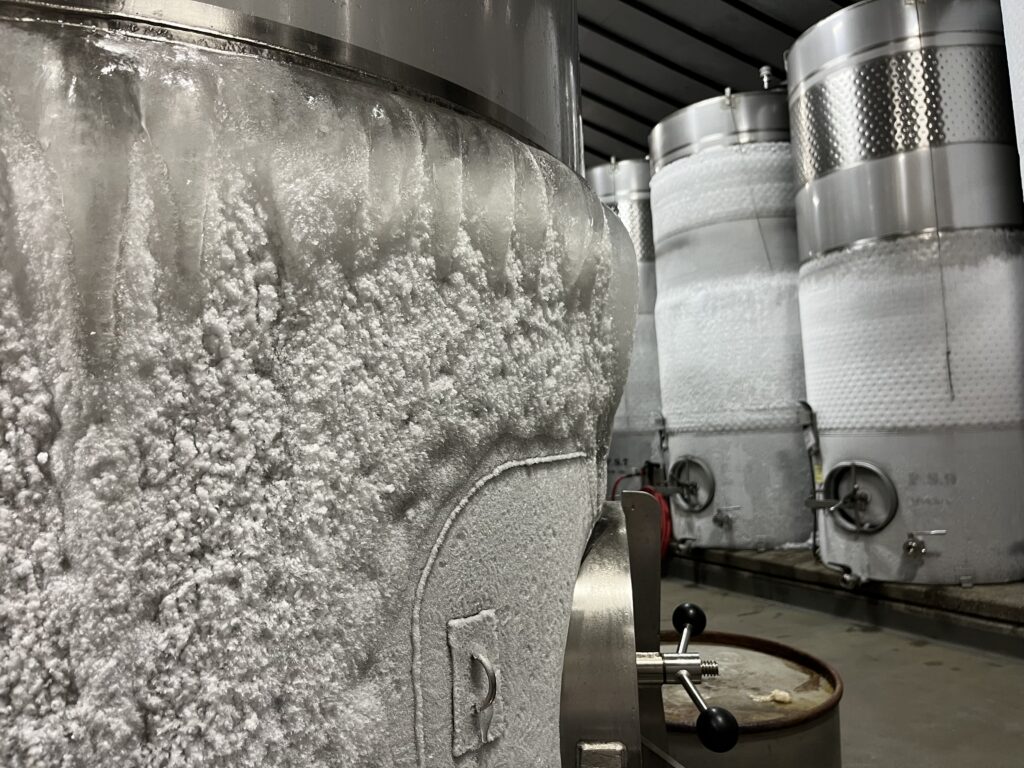
Our cellar team is busily assembling the core blends for the J. Schram Blancs, J. Schram Noirs, and J. Schram Rosé. These three blends will be the first to be bottled in April. Each of these blends has a tank-fermented Chardonnay core blend, a tank-fermented Pinot Noir core blend, a barrel-fermented Chardonnay core blend, and a barrel-fermented Pinot Noir blend. Each of those barrel cores are a combination of our non-malolactic barrels and ones that have gone through malolactic fermentation. The barrels are hand-selected by our team to be put into the J. Schram tier wines, as we only want the best of the best for those wines. Once the cores are assembled, we can work on creating the final blends and making sure that each of those blends is as perfect as we can possibly make them before bottling.
An interesting point to consider is that at no point do the cores we’re tasting have any effervescence. We have to taste the wines and predict how they will taste after the secondary fermentation. Furthermore, we have to predict how it will taste after several years of aging in the caves as a sparkling wine. How do we do that? Practice tasting, trust in the process, and detailed notetaking.
This is just one more sign that wine does indeed evolve over time. Our team is lucky enough to experience that evolution from its initial juice stage, to when it finishes fermentation, to when it has fermented in bottle to become a sparkling wine, and beyond that to a finished product that we are ready to share with you. As these wines change and evolve, they continue to develop the story behind the vintage. In 2025, I will remember a relatively cool season, remarkably high acidity in the grapes we received, a team that got along well and worked hard throughout the season to make these excellent wines for you to experience. By the time that you get to try them, you’ll have your own memories of the year to add to the story of this wine. Cheers!
Vineyard Update
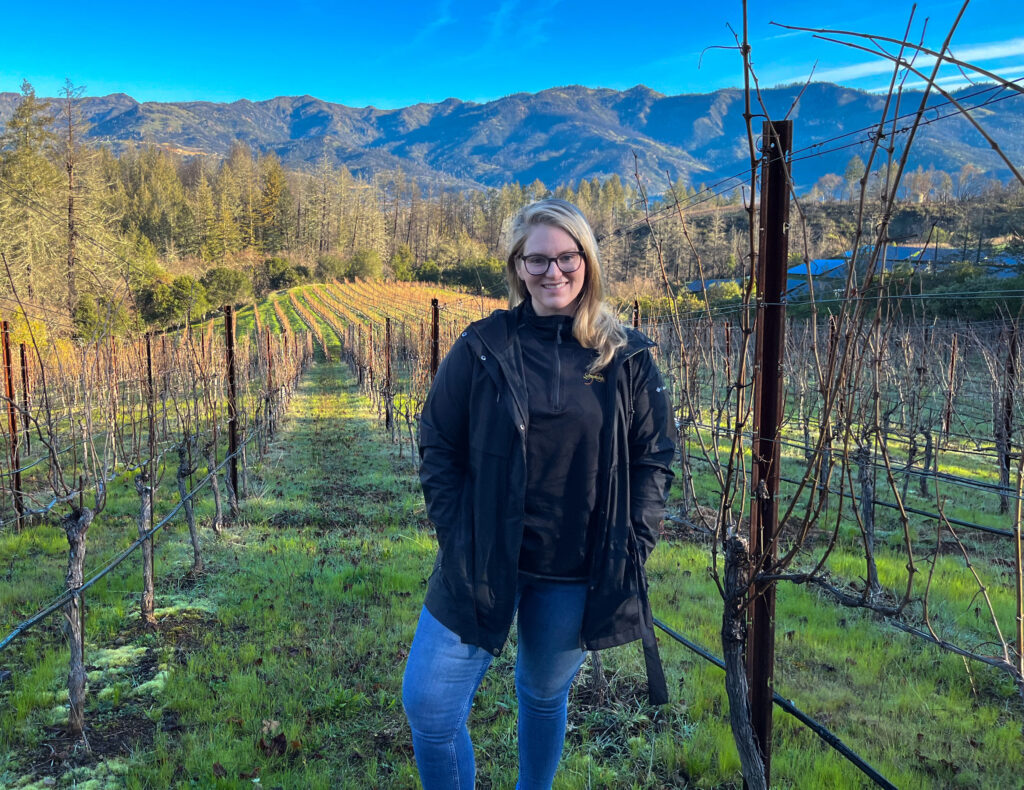
Hi, my name is Sam and I’m the Viticulturist and Grower Relations Manager for Schramsberg and Davies Vineyards. Winter is a quiet time in the vineyards as the vines are now dormant. While the vines rest and recover from the previous season, we are still very busy at the winery. We have reviewed all the 2025 base wines and from there have started making plans for 2026. Evaluating the base wines with the winemaking team helps me make decisions in the vineyard for both the sparkling and the still wine programs. For example, if we really liked a particular lot – why? A particular clone? Did we do something different in the vineyard – a different leafing strategy? Fruit thinning protocol? Maybe we picked something earlier than normal (lower brix, higher acidity?). I’ll make a note of that and perhaps plan to do the same the following year – or maybe make a change and see if it makes a difference. We are always looking for ways to improve.
Don’t worry though, the team did enjoy some time off! It was a very rainy Holiday season here in Napa Valley. Luckily the soil soaks up every inch, and the irrigation ponds are recharging. In mid-December, the ponds were still low but by the New Year, the ponds were full, which we love to see! The cover crops are flourishing. Cover crops help build and preserve soil structure, add organic matter and return nutrients to the soil. They help the soil absorb and retain water, can attract beneficial insects and pollinators, and sometimes help with unwanted weed suppression and therefore help reduce reliance on herbicides. The cover crops grow overwinter and then we either mow or have sheep graze depending on the location. These “mowing” passes happen multiple times over the course of the season as they will grow back. Different cover crops serve different purposes but ultimately the main goal is to support soil health.
Compared to December, in Napa Valley, January has been a dry month. Very cold nighttime temperatures and sunny days have set the stage for perfect pruning weather. Pruning is when vineyard crews cut back the 2025 canes and set the stage for 2026. Pruning is one of the most critical moments in viticulture. The methodical cuts one makes to the vines controls the yield, quality, vine health, balances vegetative growth, and impacts future production. Pruning season will continue through the winter before spring arrives bringing budbreak!